
Algae filaments represent a fascinating frontier in sustainable materials science, offering promise for biodegradable alternatives that could revolutionize packaging, textiles, and manufacturing industries worldwide.

🌊 The Rising Tide of Algae-Based Materials
The global search for sustainable alternatives to petroleum-based plastics has led researchers to explore innovative biomaterials derived from natural sources. Among these, algae filaments have emerged as particularly promising candidates due to their rapid growth rates, minimal resource requirements, and inherent biodegradability. Unlike conventional synthetic materials that persist in ecosystems for centuries, algae-derived products offer the potential to close the loop in material lifecycles.
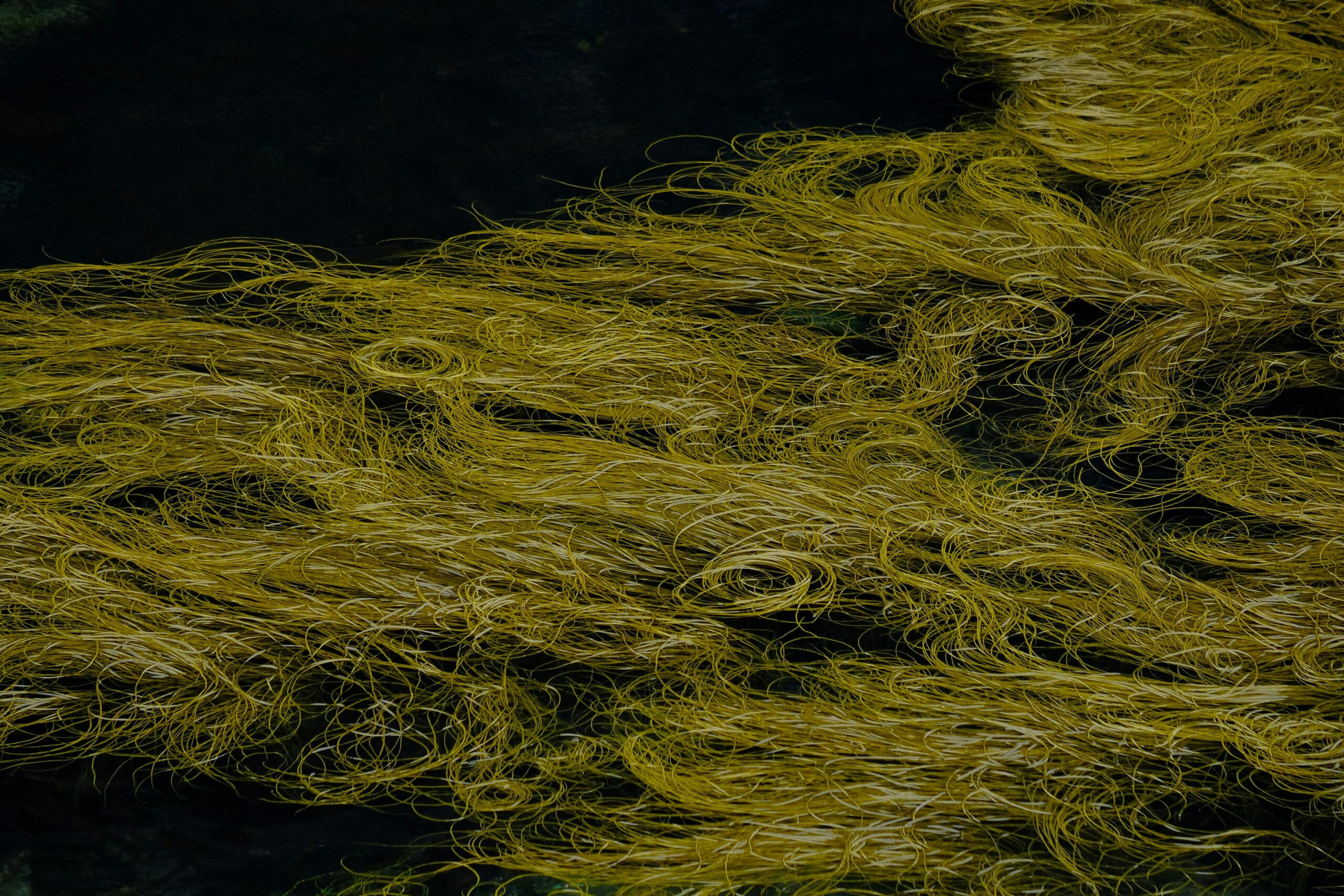
Algae filaments are essentially thread-like structures composed of polysaccharides, proteins, and other organic compounds produced by various species of algae. These microscopic organisms have been photosynthesizing and producing complex biological materials for billions of years, perfecting processes that human technology is only beginning to understand and replicate.
The biodegradability of these filaments isn’t simply a matter of them “rotting away”—it involves intricate biochemical pathways that break down complex molecular structures into simpler compounds that can be reintegrated into natural nutrient cycles. Understanding these pathways is essential for optimizing algae-based materials for specific applications while ensuring their environmental compatibility.
🔬 Molecular Architecture: What Makes Algae Filaments Unique
The structural composition of algae filaments varies significantly depending on the species, but most share common characteristics that influence their biodegradability. The primary components include alginate, cellulose, agar, and carrageenan—all polysaccharides with distinct molecular configurations.
Alginate, for instance, consists of alternating blocks of mannuronic and guluronic acid residues linked together in long chains. This particular arrangement creates flexible yet strong filaments that can form gels and fibers suitable for various applications. The ratio of these two uronic acids significantly impacts how quickly and completely the material degrades in different environments.
Cellulose from algae presents another interesting case. While chemically similar to plant cellulose, algal cellulose often exhibits different crystallinity patterns and chain lengths, affecting its susceptibility to enzymatic breakdown. These subtle differences can mean the distinction between a material that degrades in weeks versus months under similar conditions.
The Role of Cross-Linking in Degradation Rates
One critical factor determining biodegradability is the degree of cross-linking within the filament structure. Cross-links are chemical bonds that connect polymer chains, creating a three-dimensional network that enhances mechanical strength but can impede degradation. Natural algae filaments typically have moderate cross-linking, but processing methods can significantly alter this characteristic.
Researchers have discovered that controlled cross-linking can be used to fine-tune degradation rates. For packaging applications requiring short-term integrity followed by rapid breakdown, minimal cross-linking is desirable. Conversely, textile applications might benefit from enhanced cross-linking to extend product lifespan while maintaining eventual biodegradability.
⚗️ Enzymatic Breakdown: Nature’s Molecular Scissors
The biodegradation of algae filaments primarily occurs through enzymatic pathways facilitated by microorganisms in soil, water, and compost environments. These enzymes act as highly specific catalysts, targeting particular chemical bonds and systematically dismantling the polymer structure.
Alginate lyases represent the primary enzyme family responsible for breaking down alginate-based filaments. These enzymes cleave the glycosidic bonds between uronic acid residues through a beta-elimination mechanism, progressively reducing molecular weight until oligosaccharides and eventually monosaccharides remain. This process occurs most efficiently in marine environments where alginate-degrading bacteria naturally thrive.
For cellulose-containing algae filaments, cellulase enzymes take center stage. This enzyme complex includes endoglucanases that attack internal bonds, exoglucanases that work from chain ends, and beta-glucosidases that convert cellobiose to glucose. The synergistic action of these enzymes enables complete cellulose degradation, though the rate varies considerably based on cellulose crystallinity and accessibility.
Microbial Communities: The Unsung Heroes of Degradation
Behind every degradation pathway stands a community of microorganisms producing the necessary enzymes. Bacteria such as Pseudomonas, Vibrio, and Bacillus species are prolific alginate degraders in marine and soil environments. Fungal species, particularly from the Trichoderma and Aspergillus genera, excel at cellulose breakdown through their powerful cellulase systems.
The composition and activity of these microbial communities depend heavily on environmental conditions. Temperature, pH, oxygen availability, and moisture content all influence which species predominate and how efficiently they degrade algae filaments. This environmental sensitivity explains why the same material might degrade rapidly in a controlled composting facility but persist longer in cold, dry soil.
🌡️ Environmental Factors Shaping Degradation Kinetics
Understanding biodegradability requires examining not just the material itself but the environmental context in which degradation occurs. Algae filaments respond dynamically to their surroundings, with degradation rates varying by orders of magnitude across different conditions.
Temperature stands as perhaps the most influential factor. Enzymatic activity generally increases with temperature up to optimal ranges specific to each enzyme system. For many algae-degrading enzymes, activity peaks between 30-40°C, with significant reductions above 50°C where protein denaturation begins. In cold environments below 10°C, degradation slows dramatically as both enzyme kinetics and microbial metabolism decrease.
Moisture availability proves equally critical. Biodegradation is fundamentally a hydrolytic process requiring water molecules to break chemical bonds. In dry conditions, even highly biodegradable algae filaments may persist indefinitely, not because they’re resistant to degradation but because the necessary reactions cannot proceed without adequate moisture.
pH and Its Profound Influence
The acidity or alkalinity of the degradation environment significantly impacts both enzyme stability and activity. Most algae-degrading enzymes function optimally near neutral pH, with activity declining sharply in extremely acidic or alkaline conditions. However, certain specialized microorganisms have adapted to extreme pH environments, producing enzymes with unusual stability profiles.
Interestingly, the degradation process itself can alter local pH. As organic acids form during breakdown, the immediate microenvironment may become more acidic, potentially affecting subsequent degradation rates. This self-modifying aspect of biodegradation adds complexity to predicting material behavior in real-world scenarios.
🔄 Comparing Degradation Across Different Environments
The practical application of algae filaments requires understanding how they perform across diverse environments. A material perfect for marine applications might behave quite differently in terrestrial composting facilities or landfills.
| Environment | Degradation Rate | Primary Mechanism | Key Factors |
|---|---|---|---|
| Marine Water | Fast (2-8 weeks) | Alginate lyase action | Salt concentration, temperature, microbial density |
| Industrial Compost | Very Fast (1-4 weeks) | Mixed enzymatic | Heat, moisture, oxygen, diverse microbes |
| Soil | Moderate (2-6 months) | Cellulase and mixed enzymes | Soil type, moisture, temperature, microbial activity |
| Freshwater | Moderate-Slow (3-12 weeks) | Hydrolysis and enzymatic | Temperature, dissolved oxygen, nutrient levels |
| Landfill (anaerobic) | Slow (6-24 months) | Anaerobic fermentation | Moisture, anaerobic microbes, pH |
These varying degradation timelines illustrate why context matters when claiming biodegradability. A filament labeled “biodegradable” should specify under what conditions and timeframes degradation occurs. Industry standards increasingly require such specificity to prevent greenwashing and ensure materials perform as advertised.
🧪 Advanced Analytical Techniques for Studying Degradation
Modern science employs sophisticated methods to track and quantify the biodegradation of algae filaments with remarkable precision. These techniques provide insights into degradation mechanisms that would have been impossible just decades ago.
Respirometry measures carbon dioxide production or oxygen consumption as microorganisms metabolize algae filaments, providing real-time data on biodegradation rates. This approach offers quantitative assessments of mineralization—the complete conversion of organic carbon to CO2—considered the gold standard for biodegradability.
Spectroscopic methods including Fourier-transform infrared spectroscopy (FTIR) and nuclear magnetic resonance (NMR) reveal chemical changes occurring within filament structures during degradation. These techniques can identify specific bond breakage patterns and the formation of intermediate degradation products, illuminating mechanistic pathways.
Microscopy Reveals Structural Evolution
Scanning electron microscopy (SEM) and atomic force microscopy (AFM) provide visual documentation of physical degradation. Images captured at various stages reveal how microbial colonization begins, surface erosion progresses, and structural integrity eventually fails. These observations complement chemical analyses, offering a comprehensive degradation picture.
Molecular weight distribution analysis through gel permeation chromatography tracks polymer chain fragmentation over time. As degradation proceeds, the molecular weight distribution shifts toward lower values, providing quantitative metrics for comparing degradation rates across different conditions or material formulations.
💡 Optimizing Algae Filaments for Enhanced Biodegradability
Armed with mechanistic understanding, researchers can now deliberately engineer algae filaments with optimized degradation profiles. This represents a shift from simply using natural materials to intelligently designing bio-based products with specific performance characteristics.
Blending different algal polysaccharides creates composite filaments with tunable properties. Combining fast-degrading alginates with slower-degrading cellulose components yields materials with customized degradation kinetics. The proportions can be adjusted to match application requirements—rapid breakdown for single-use items, extended durability for longer-term applications.
Surface modification techniques offer another optimization avenue. Treating algae filaments with specific enzymes or chemical agents can increase surface area, enhance hydrophilicity, or introduce cleavage sites that accelerate initial degradation. These modifications must balance improved biodegradability against maintaining sufficient mechanical properties during intended use.
Bioaugmentation Strategies
Some innovative approaches incorporate degradation-promoting agents directly into algae filament products. Embedding microbial spores or enzymes within the material ensures degradation catalysts are present when environmental conditions become favorable. This strategy proves particularly valuable in environments with limited natural microbial populations capable of efficiently degrading algae polymers.
Nutrient additives represent another bioaugmentation approach. Including nitrogen or phosphorus sources within algae filaments can stimulate microbial growth and activity in nutrient-poor environments, potentially accelerating degradation where it might otherwise stall.
🌍 Real-World Applications and Performance Metrics
The theoretical biodegradability of algae filaments translates into practical benefits across numerous industries increasingly pressured to adopt sustainable materials. Understanding real-world performance helps bridge the gap between laboratory studies and commercial viability.
In packaging applications, algae-based filaments are being developed for nets, films, and cushioning materials. Field trials demonstrate that marine packaging made from alginate-rich filaments degrades within weeks when exposed to seawater, eliminating the persistent pollution caused by conventional plastic packaging that reaches oceans. This performance profile makes algae filaments particularly attractive for aquaculture and maritime industries.
Textile applications present different challenges and opportunities. Algae filament fibers blended with cotton or other natural fibers create fabrics with enhanced moisture management and eventual biodegradability. While pure natural fibers already biodegrade, algae additions can accelerate this process and impart additional functional properties like antimicrobial activity.
Agricultural and Horticultural Uses
Agricultural applications for algae filaments include biodegradable mulch films, seedling pots, and controlled-release fertilizer carriers. These products must maintain integrity during the growing season but degrade after harvest, eliminating plastic residues that otherwise accumulate in agricultural soils. Field studies show properly formulated algae filaments achieve this delicate balance, degrading substantially within 6-12 months post-application.
- Erosion control textiles made from algae filaments stabilize soil while establishing vegetation, then biodegrade completely within one to two seasons
- Biodegradable plant ties and clips provide temporary support that doesn’t require removal, degrading naturally as plants mature
- Slow-release nutrient carriers deliver fertilizers gradually while degrading into organic matter that enhances soil structure
- Seedling containers eliminate transplant shock by allowing direct planting without removal, with containers degrading into compost
🚀 Future Horizons: Innovation in Algae Filament Science
The field of algae filament biodegradability continues evolving rapidly, with emerging research directions promising even more sophisticated materials and applications. Several frontier areas warrant attention from researchers and industry stakeholders alike.
Genetic engineering of algae species offers possibilities for producing filaments with designer properties. By modifying biosynthetic pathways, researchers can alter polysaccharide composition, molecular weight distributions, and functional group placements—all factors influencing biodegradability. Such engineered algae could produce filaments optimized for specific applications without post-harvest modification.
Smart biodegradable materials represent another exciting frontier. Imagine algae filaments that remain stable during use but rapidly degrade when exposed to specific triggers—perhaps enzymatic activators released when products reach end-of-life or environmental signals indicating proper disposal conditions. Such trigger-responsive materials could revolutionize product lifecycle management.
Integration with Circular Economy Principles
The ultimate vision positions algae filaments within comprehensive circular economy frameworks where materials flow in closed loops with minimal waste. Biodegradation becomes one pathway among several for material recovery and reintegration into production cycles. Composted algae products return nutrients to soil, supporting biomass production that feeds subsequent material generation.
Advanced biorefinery concepts could extract multiple value streams from algae, with filament production integrated alongside biofuel, nutritional supplement, and chemical feedstock generation. This integrated approach maximizes resource efficiency while ensuring economic viability that pure waste-management approaches often lack.
📊 Measuring Success: Standardization and Certification
As algae filament markets mature, standardized testing protocols and certification schemes become essential for ensuring product claims match actual performance. Various international standards now address biodegradability assessment, though gaps remain specific to algae-based materials.
ASTM D6400 and EN 13432 standards provide frameworks for assessing compostability, requiring materials to demonstrate biodegradation, disintegration, and lack of ecotoxicity within specified timeframes under controlled composting conditions. While applicable to many algae filaments, these standards primarily address terrestrial composting environments, leaving marine biodegradability assessment less standardized.
Emerging standards specifically for marine biodegradability, including ASTM D6691 and D7473, help address this gap. These protocols test materials in actual or simulated marine environments, measuring degradation rates under conditions relevant to ocean disposal scenarios. Algae filaments often perform exceptionally well under these standards given their marine origins.
🌱 Environmental Impact Beyond Biodegradability
While biodegradability represents a crucial sustainability attribute, comprehensive environmental assessment requires examining algae filament production and use from multiple angles. Life cycle analysis provides this holistic perspective, accounting for resource inputs, emissions, and ecological impacts across entire product lifecycles.
Algae cultivation offers significant environmental advantages over conventional agriculture or petrochemical production. Algae farming requires minimal land, can utilize wastewater or brackish water unsuitable for food crops, and sequesters carbon dioxide during photosynthetic growth. These factors contribute to favorable life cycle profiles even before considering end-of-life biodegradability advantages.
However, processing algae into filaments requires energy and potentially chemical inputs that must be accounted for in sustainability assessments. Optimization of extraction and spinning processes continues, aiming to minimize environmental footprints while maintaining product quality. Green chemistry principles increasingly guide these developments, favoring water-based processing and renewable energy sources.
🎯 Navigating Challenges and Limitations
Despite their promise, algae filaments face challenges that must be acknowledged and addressed for widespread adoption. Cost competitiveness with established synthetic materials remains a significant barrier, though prices continue declining as production scales increase and processes improve.
Performance characteristics present another challenge area. While algae filaments excel in biodegradability, matching the mechanical properties, water resistance, and durability of conventional synthetics requires ongoing material science innovation. Applications tolerating trade-offs in performance for sustainability gains are adopting algae materials first, gradually expanding as properties improve.
Consumer education represents a less technical but equally important challenge. Biodegradability claims can confuse consumers unfamiliar with the importance of disposal conditions. Clear labeling indicating proper disposal methods—whether home composting, industrial composting, or regular waste streams—helps ensure materials reach environments where biodegradation can proceed as intended.
✨ The Promise of a Biodegradable Future
Algae filaments stand at the intersection of biotechnology, materials science, and environmental stewardship, embodying possibilities for manufacturing that works with natural systems rather than against them. The scientific understanding of biodegradability pathways continues deepening, enabling ever more sophisticated material designs tailored to specific applications and disposal contexts.
As production costs decline, performance properties improve, and regulatory frameworks mature, algae filaments are poised to capture increasing market share across packaging, textiles, agriculture, and beyond. This transition represents not merely substituting one material for another but fundamentally rethinking how we design, use, and dispose of products in harmony with planetary boundaries.
The journey from laboratory curiosity to mainstream material continues, driven by scientific innovation, environmental necessity, and growing recognition that sustainable alternatives need not compromise functionality or convenience. Algae filaments exemplify how nature’s ancient wisdom, understood through modern science, can guide humanity toward a more sustainable relationship with the materials that shape daily life.